Apple ATG engineer Tom Gilley looks back:
Bob (Alkire) is a genius, another one of these super-smart people who had already worked at Atari, HP Labs, or Xerox. And a lot of those guys and gals ended up at Apple in ATG at the time, in part because the budgets then were insane. After all, the margins on the Mac were incredible. We had an amazing budget, and at the same time, it was super competitive, not only within ATG but also between ATG and the Product Development Group.
Gilley believed that there was a better, faster way to build, test and pitch ideas. He and Alkire introduced the ‘new product introduction’ (NPI) process of taking a product idea from concept to pre-production.
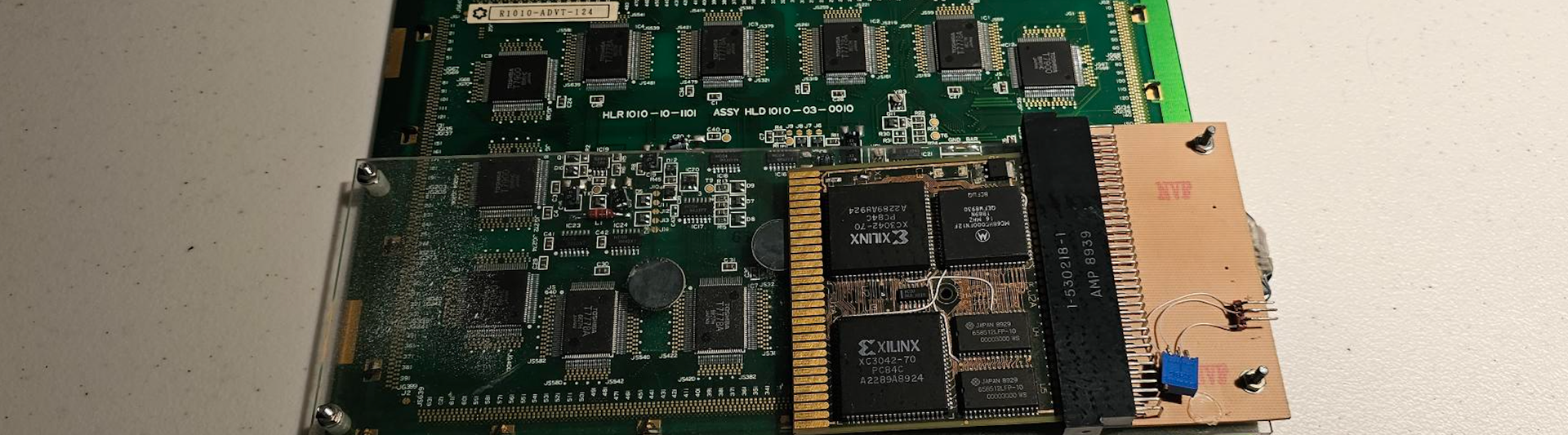
And that process lived inside what we labelled the Concept Integration Lab (CIL). Our objective was to rapidly move ideas to working prototypes. First though, all of these ideas also needed a Market Requirements Document (MRD), then a Product Requirements Document (PRD), renderings to refine the idea, followed by models to communicate the form factor, and then working prototypes, which were rough but good enough for concept demo purposes. We started on the first Smartifacts concept system - a hand-held Mac with reconfigurable computing. The key issue to resolve with a handheld Mac was size, and the most significant item was the printed circuit board.
Alkire continues:
Remember, for that time, there wasn't the notion of a microcontroller or southbridge; you either did a custom IC or used a lot of chips for your peripherals.
Alkire chose Field Programmable Gate Arrays (FPGA) for the handheld.
Gilley adds:
Bob's expertise in FPGA work was what fueled the first hand-held Macintosh project. We were enamored with the new Xilinx FPGA 3032 and decided to do all the support circuitry in the FPGA. The first version was on NuBus card (for IIFx) based on the stock 68k chip, then we decided to make a stand alone version mounted to an LCD.
Alkire continues:
Apple had hired this fellow from Toshiba, who had worked on a new color LCD, but Apple wasn't yet committed to that technology. I got permission to build an interface for his LCD using a frame buffer out of a Xilinx FPGA and hooked it to a Macintosh.
Gilley continues:
We created reconfigurable soft logic for interfacing into NuBus cards, the LCD, a mouse and keyboard, and all that. Which all meant you could reconfigure the computer on the fly. Being a handheld computer, you might not want to have all functions in silicon at the same time, which was a concept we borrowed from Ivan Sutherland. I was able to check out the Mac ROM and Mac OS source code to compile into a new system. I ported the Mac OS to see if it would boot, and it did.
Alkire adds:
In later development, we had regular monitors and used a Mac II with Macintosh Programmer's Workshop (MPW), and although it had its quirks, it was usable. MacOS was a reasonable environment to work in, and it had a learning curve to it. I was doing FPGAs but had no synthesis tools, just the physical tools (xact). The layout of the graphics controllers strained my eyes!
Gilley continues:
Then I created a model and put a curve in it so it would fit in the back pocket nicely, like a hip flask. We called it Handi-Mac and it proved the value of the Concept Integration Lab (CIL). We had made a prototype quickly and cheaply to see if it was possible, and then once it was proven out, we showed it to the executives.
One of the visitors was ATG boss Larry Tesler who told the CHM:
They did a handheld Macintosh that ran the Macintosh operating system, an older version, but one that we all would recognize from the 1984 demos. It was just a little handheld thing…a predecessor to the iPhone.
Then Gilley looked to build an operating system for their handheld. A challenge that the much larger Newton team had spent years on. Tesler recalls:
…during the early Newton days it came up as an alternative. It’s like why are we doing a whole new operating system? Why don’t we just do the Mac operating system?, and people would say, “Oh, you can’t fit the Mac operating system on a small device,” and then Harry Vertelney would have (Tom Gilley) come out and say, “But we did.”
With an OS done, Gilley and Alkire pushed ahead with further iterations:
Bob and I then created a credit card size version of Handi-Mac based on the Motorola 68340. That processor was a game changer, for a hand-held device, because we could put in to sleep and bring it back - saving power.
Excerpt from https://books.by/john-buck/inventing-the-future