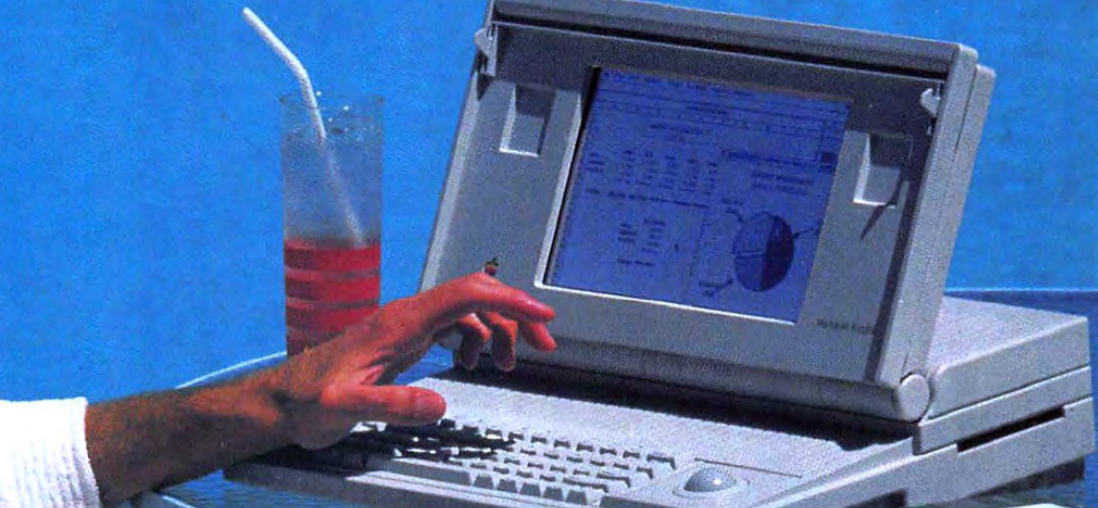
Jon Krakower recalls progress on Project Laguna aka the Macintosh Portable:
There are so many stories I could tell you. But one of the more important ones, I think, was the fact that the mechanical design engineers assigned to our team had no experience with designing small, lightweight, portable products. Other than the IIc, Apple itself had never shipped a genuine portable product and therefore had no experience with the special size and weight requirements. They brought in people who only had experience designing desktop computers, CRT displays, or printers. And I guess that's why, in the end, the Mac Portable, which should have weighed in at 7 or 8 lbs, weighed 16 lbs. It wasn’t just the mechanical product designers that caused issues.
Jean-Louis Gassée insisted that Laguna, the Mac Portable, had to be designed to be assembled with no screws. He just said, ‘We're going to do this. No screws. Just snap together.' We did what he wanted, and there were no screws; but it was, in my opinion, a wrong decision because it did limit how small you can make the product and make it durable and reliable. All of these demands and shortcomings made it impossible to build a competitive portable computing device. But I guess, in the end, it inspired me to think about what was needed to create a notebook experience that was as unique as the Macintosh had been in 1984.
As Krakower began a one-person skunkworks to build a light and powerful Apple laptop, the portable Macintosh had been in development for two years. Journalists heard rumors of a 1989 launch date but CEO John Sculley poured cold water on that timing:
“…Even though Apple still plans to deliver the laptop next year, quantities would be limited at shipping time.”
Sculley blamed the delays on the poor yield of high-resolution display technology. Jon Krakower’s misgivings about the Mac Portable grew as it entered production.
I thought it would still be okay because I knew there was such a pent-up demand for any portable Mac, regardless of the size and weight. Maybe senior management did know something that I was missing. Either way, I thought Version 1.0 of the Portable might buy us enough time to bring a truly portable machine into the market before the competitors.
Then MacWeek's caustic Mac the Knife columnist reported on a tightening of security at De Anza 3 after the theft of a prototype. The missing device's identity was unknown but:
“….the Knife's best guess is the elephantine portable…”
Only a few people knew what was about to be released, and they were worried. Apple engineer Jon Krakower’s misgivings about the Macintosh
Portable had only grown as the launch loomed. The real problem, as we approached the launch in late 1989, wasn’t the type and weight of the batteries or the LCDs or any of the technology; it was that Apple and our team’s product was just very late to the market. To be honest, we now knew from talking to suppliers and hearing what was in the pipeline with other companies that the Mac Portable was at least two years behind everyone else, maybe three or four years!
Excerpt from https://books.by/john-buck/inventing-the-future